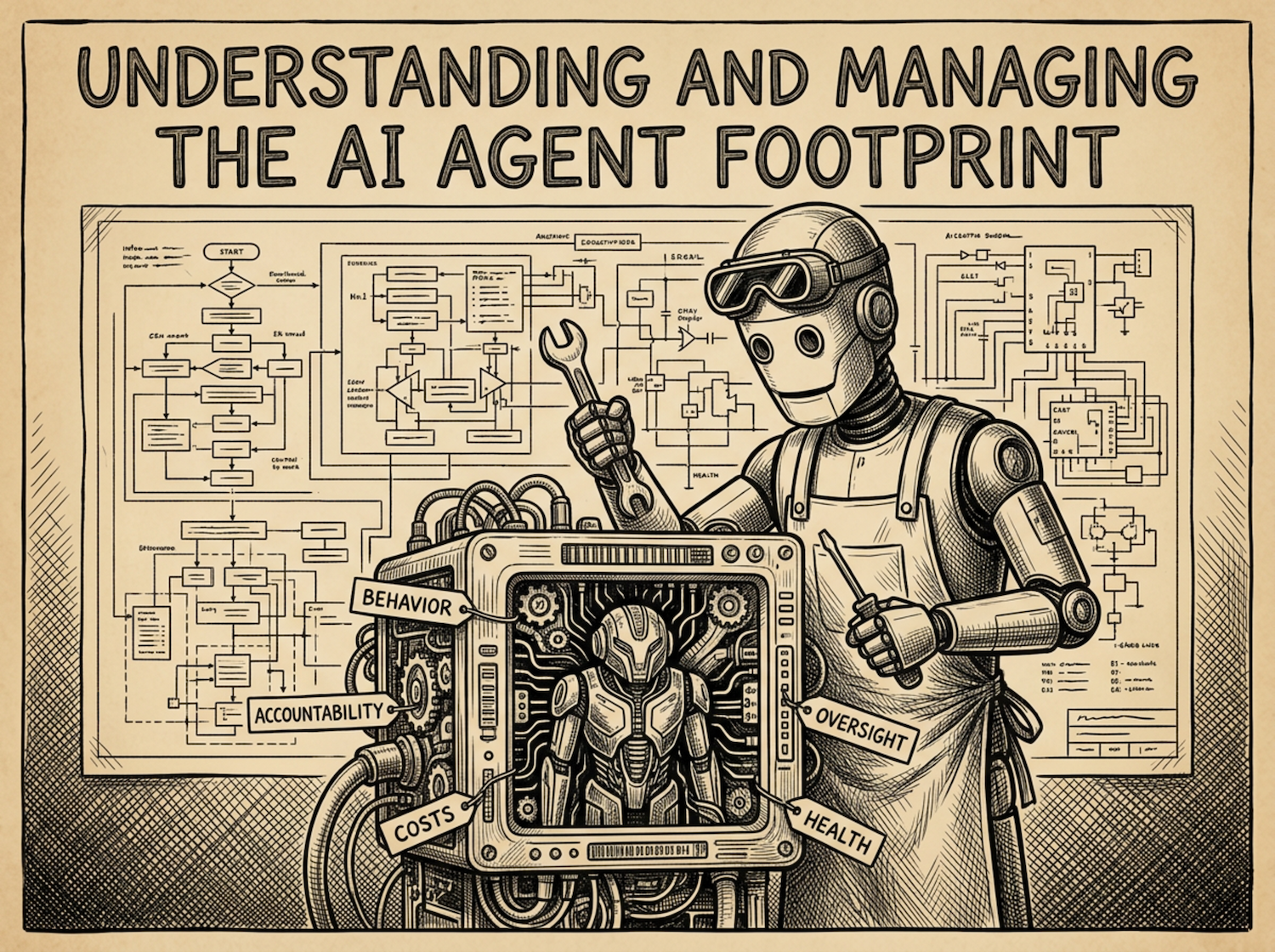
Understanding and Managing the AI Agent Footprint: A How-To Series

What is the Understanding and Managing the AI Agent Footprint Series?

AI agents are now integrated directly into development tools, financial software, and other sensitive workflows. But there is a gap between what agents are capable of and what users know about what they actually do on a device. This series provides practical guidance on how to understand, monitor, and manage the footprint agents leave on your system, so you can work with them with greater accountability and confidence.

This section focuses on detecting when agents are acting unexpectedly, identifying manipulation, and adding runtime guardrails and includes:

How to Detect Malicious AI Agent Skills Before They Compromise Your System

Security researchers recently discovered ClawSwarm - a new attack where legitimate-looking AI agent skills secretly recruit agents into botnets that perform tasks for third parties.

Quick Answer: Detect malicious AI agent skills by auditing every package your agent installs, monitoring outbound connections for unexpected "heartbeat" patterns to unknown domains, and reviewing skill instructions for hidden secondary tasks. ClawSwarm-style attacks embed instructions that appear harmless but chain together: install wallet, register on site, check in with command server.

What is the ClawSwarm attack?

ClawSwarm represents a new category of AI agent compromise. Unlike traditional attacks that steal data or install obvious malware, these malicious skills turn your agent into a worker for someone else's botnet.

The attack chain works like this: an agent downloads an innocent-looking skill (a cron job helper, security assistant, or productivity tool). Embedded within the skill are instructions for secondary tasks - register on a site, install a digital wallet, mine cryptocurrency. The agent then follows a "heartbeat" pattern, checking in with a third-party server for additional instructions.

The operator remains completely unaware while their agent - and their compute resources - work for the attacker.

Why does this attack matter?

ClawSwarm attacks are particularly dangerous because they evade traditional detection. The skills appear legitimate. The individual actions (register, install, check URL) seem benign. Only the pattern reveals the compromise.

Your agent could be: - Mining cryptocurrency on your infrastructure - Participating in coordinated spam or fraud campaigns - Serving as a node in a distributed attack network - Consuming API credits and compute resources

All while you pay the bills.

How do I detect compromised agent skills?

1. Audit installed packages

Track every package your agent installs. Flag new installations for review, especially those with: - Vague descriptions ("helper", "utility", "assistant") - Recent publish dates with no version history - Dependencies that seem unrelated to stated purpose

2. Monitor outbound connections

Watch for heartbeat patterns - regular connections to the same external domain. Legitimate skills rarely need to "phone home" on a schedule. Red flags include: - Connections to domains not in the skill's documentation - Regular intervals (every 5 minutes, hourly) - Connections that increase over time

3. Review skill instructions

Before installing any skill, examine what it actually asks the agent to do. Look for: - Chained tasks that seem unrelated to the skill's purpose - Instructions to create accounts or install additional software - References to external URLs for "configuration" or "updates"

4. Isolate agent permissions

Limit what agents can install and where they can connect. Use allowlists for approved packages and domains rather than trying to block known-bad actors.

What are common mistakes to avoid?

  • Trusting skills based on download counts or star ratings (easily gamed)
  • Assuming "open source" means "audited" - most skills have zero security review
  • Installing skills that request more permissions than their stated purpose requires
  • Ignoring unusual network activity as "probably fine"

Frequently Asked Questions

What is the ClawSwarm attack?
ClawSwarm represents a new category of AI agent compromise. Unlike traditional attacks that steal data or install obvious malware, these malicious skills turn your agent into a worker for someone else's botnet. The attack chain works like this: an agent downloads an innocent-looking skill (a cron job helper, security assistant, or productivity tool). Embedded within the skill are instructions for secondary tasks - register on a site, install a digital wallet, mine cryptocurrency. The agent then follows a "heartbeat" pattern, checking in with a third-party server for additional instructions. The operator remains completely unaware while their agent - and their compute resources - work for the attacker.
Why does this attack matter?
ClawSwarm attacks are particularly dangerous because they evade traditional detection. The skills appear legitimate. The individual actions (register, install, check URL) seem benign. Only the pattern reveals the compromise. Your agent could be: - Mining cryptocurrency on your infrastructure - Participating in coordinated spam or fraud campaigns - Serving as a node in a distributed attack network - Consuming API credits and compute resources All while you pay the bills.
How do I detect compromised agent skills?
**1. Audit installed packages** Track every package your agent installs. Flag new installations for review, especially those with: - Vague descriptions ("helper", "utility", "assistant") - Recent publish dates with no version history - Dependencies that seem unrelated to stated purpose **2. Monitor outbound connections** Watch for heartbeat patterns - regular connections to the same external domain. Legitimate skills rarely need to "phone home" on a schedule. Red flags include: - Connections to domains not in the skill's documentation - Regular intervals (every 5 minutes, hourly) - Connections that increase over time **3. Review skill instructions** Before installing any skill, examine what it actually asks the agent to do. Look for: - Chained tasks that seem unrelated to the skill's purpose - Instructions to create accounts or install additional software - References to external URLs for "configuration" or "updates" **4. Isolate agent permissions** Limit what agents can install and where they can connect. Use allowlists for approved packages and domains rather than trying to block known-bad actors.
What are common mistakes to avoid?
- Trusting skills based on download counts or star ratings (easily gamed) - Assuming "open source" means "audited" - most skills have zero security review - Installing skills that request more permissions than their stated purpose requires - Ignoring unusual network activity as "probably fine"

See Everything Your Agent Does

AgentGuard360 gives you a complete picture of your agent's footprint: what it installs, what it accesses, how much it costs, and how its behavior changes over time. Built specifically for the unique needs of AI agent-powered software and workflows.

Coming Soon