

Why Cursor, Codex, Claude Code and Other LLM Costs are Rising
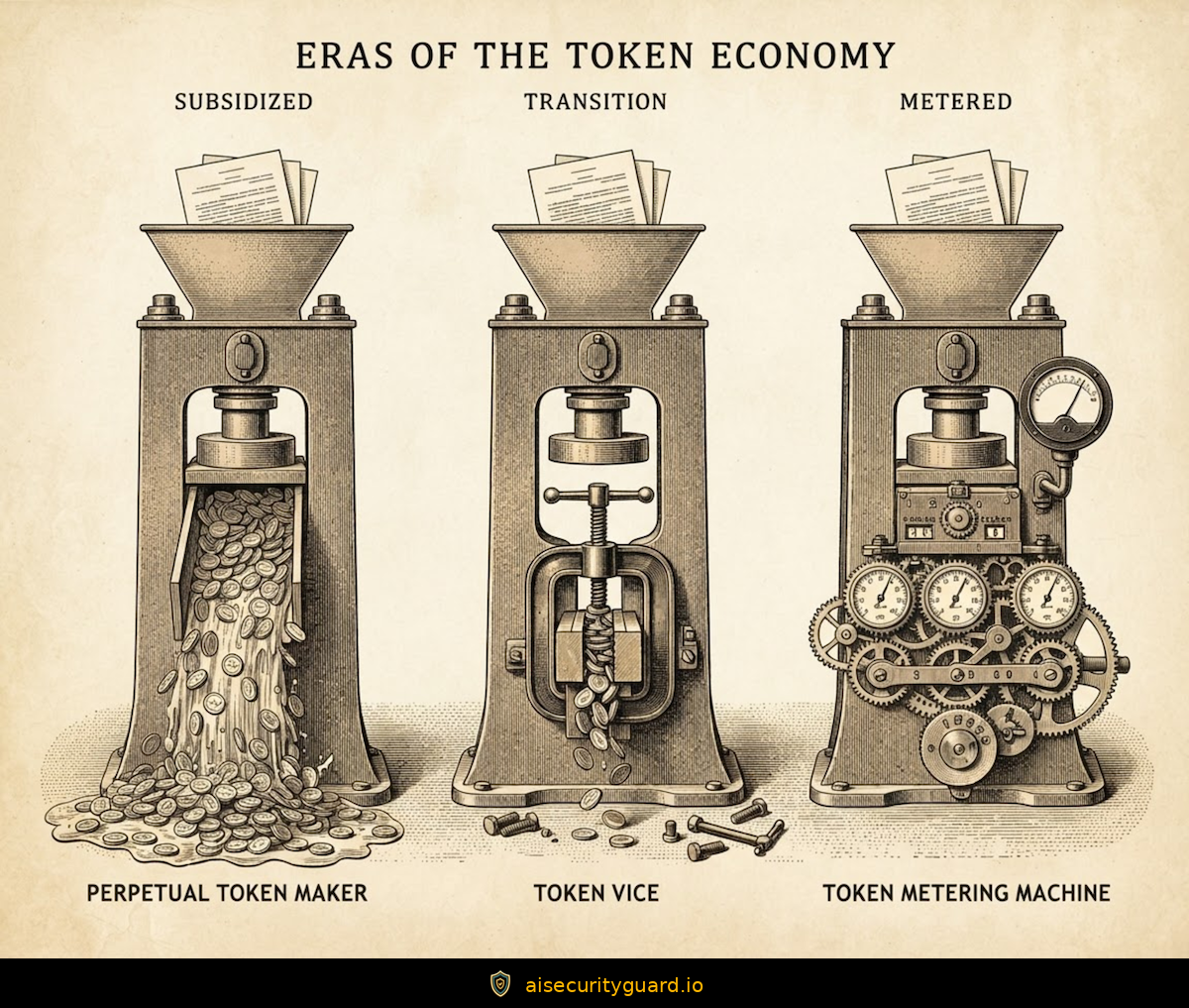
Over the last few years, AI labs, such as Anthropic and OpenAI, have provided compute services at heavily subsidized prices. The strategy was straightforward: offer AI at or below compute cost to attract users, build habits, and (hopefully) lock builders and others into their ecosystems. This strategy was a tremendous success. Almost overnight, people made AI an integral part of their workflows across a diverse array of areas, including marketing and software engineering.
Satisfying the public's insatiable demand for compute has put AI labs into an unsustainable financial position. They are spending more than they make. And, with several labs going public in the next few months, their books will be open to the public. They'll be under pressure to demonstrate cost discipline and steady revenue growth.
The era of low-cost, heavily subsidized cloud AI inference is ending. AI labs are moving to a new pricing structure. GitHub Copilot switched to AI Credits on 1 June 2026. Anthropic moved Claude Code programmatic usage to metered credit pools on 15 June 2026. OpenAI ended the free period for Workspace Agents on 6 July 2026. All three migrations happened within a six-week window (Vaughan, 2026). Subscription tiers have been reduced or eliminated. Premium features are being moved to higher pricing tiers. Usage-based billing is replacing flat rates.
In a world where the cost structure of LLM inference is rapidly changing, users are racing to adapt. Many have focused on using less expensive LLMs, but these systems come with their own costs (even if they are running locally). This is because there's another part of the cost efficiency and resource maximization equation: domain expertise and skill at guiding LLMs to successful outcomes. But what skills are most needed? And what are the specific habits of top-rated LLM users that lead to positive economic outcomes?
These are the type of questions this research was designed to address. At its core is an analysis featuring nearly 240,000 simulated LLM users. This work was heavily influenced by a June 2026 study published by Anthropic: "Agentic coding and persistent returns to expertise". Based on this research, Anthropic suggests that between October 2025 and April 2026:
- The economic value of tasks completed by people with the assistance of LLMs has increased. The rate of value accrural to LLM-aided tasks rose most rapidly after January 2026
- User domain expertise makes a difference. Novices at a task tend to be less successful than those with more experience. However, the expertise dividend does not extend to the most experienced users. Those with intermediate levels of expertise get the most benefit.
This research is highly useful, but raises some additional questions. Most importantly:
- Are high LLM costs from cloud computing services worth the spend, especially as monthly costs continue to rise?
- What are the main cost drivers associated with LLM use, specifically in terms of potentially wasted token generation, and how can these be mitigated?
- What does an efficient LLM user look like? What are their habits and behaviors?
- What are the financial and economic costs of inefficient LLM use habits?
This research provides answers to these questions and reveals the secrets of a top-notch AI agent user discovered via the simulation: The LLM Whisperer.